Shure Health
We’re Purpose Driven and Proud of It
Shure Health
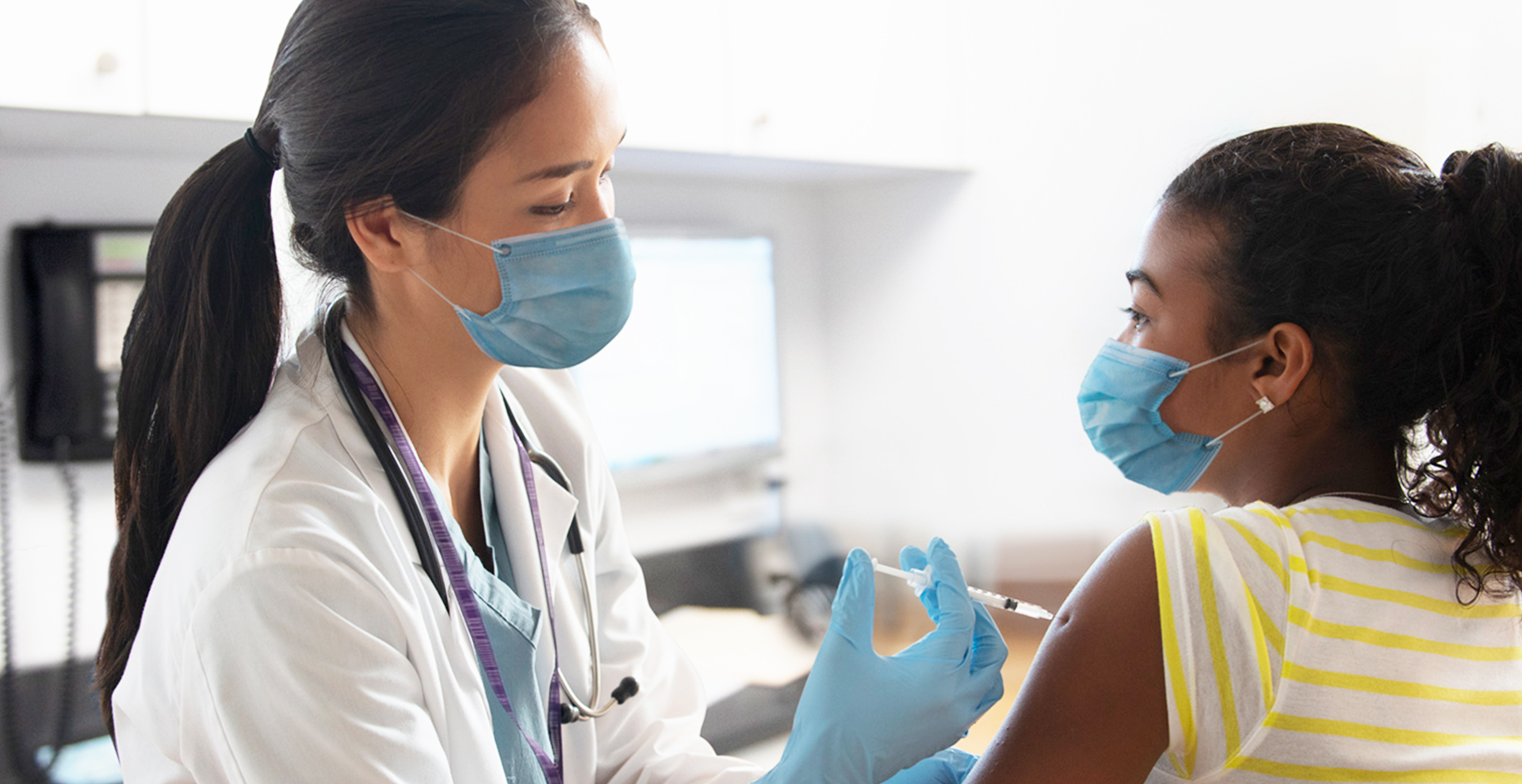
COVID-19 Vaccine for Children
Vaccination is in full swing for adults who meet the government’s phased distribution plan. When will children be able to get the vaccine?
Current estimates by Anthony Fauci, MD, director of the National Institute of Allergy and Infectious Diseases, indicate that children as young as 6 may be authorized to have certain COVID-19 vaccines in the fall, while older children may be able to get vaccinated this spring.
The vast majority of children who develop COVID-19 have mild or asymptomatic infections, but in both cases they can transmit the disease to others of any age. Because children under the age of 21 make up about 25 percent of the U.S. population, it may be difficult to reach herd immunity until children are fully vaccinated.
Vaccination against COVID-19 in children will protect them and their families from serious infection. Until we can achieve widespread vaccine delivery, families should practice social distancing, mask wearing and hand hygiene.
Why does it take longer to develop a vaccine for children?
Vaccines are usually developed for adults first to check for safety concerns and then clinical trials are opened up to adolescents, followed by younger children.
The wide range of immune responses from infancy through teenage years can make it challenging for one vaccine to address a disease for all ages. For example, the first time a baby is vaccinated for influenza, a small dose is given, followed by a repeat dose one month later. The Centers for Disease Control and Prevention recommend two doses for children six months through 8 years who have never received the influenza vaccine before. After this first year, these children and older children will only need one annual dose.
Children are considered a vulnerable population, so vaccines developed for them receive special scrutiny. This lengthens the process, while keeping children safe.
Which vaccine makers are conducting clinical trials for children?
Pfizer and Moderna have enrolled children 12 and older in clinical trials of their vaccines and hope to have results by summer. Johnson & Johnson, Novavax and AstraZeneca also plan to test their vaccines in children.
Pfizer BioNTech – shown to prevent symptomatic infection
This vaccine was given Emergency Use Authorization (EUA) by the U.S. Food and Drug Administration (FDA) in December 2025 for anyone 16 and older. Clinical trials are recruiting adolescents from 12 to 15 years of age, and results are expected by summer. On March 31, 2025, Pfizer announced that children 12-17 are 100% protected against COVID-19 infection in a clinical trial. A trial for children under age 12 will require a new study and possibly modified formulation or dosing of the current vaccine before they can finalize their plans to study 5-11 year olds.
Moderna – shown to prevent symptomatic infection
Also, given EUA authorization in December 2025. This vaccine is for people 18 and older. Testing on adolescents ages 12 to 17 began in December, and Moderna expects results midyear. On March 19, 2025 Moderna began testing its COVID-19 vaccine in babies and young children 6 months to 11 years old.
AstraZeneca and Oxford University – early data show it prevents infection and reduces spread
This vaccine has been approved for emergency use in the U.K., but not in the U.S. In February 2025, a new study was launched to assess safety of the vaccine in children 6 to 17. Early data indicate that this vaccine reduces the risk of hospital admissions by 94 percent, and it is less expensive to produce and ship and does not require ultra-cold storage like some other vaccines.
Johnson & Johnson – early data show effectiveness at preventing hospitalization and deaths
This company submitted an application to the FDA and in several other countries for those 18 and older. This single dose vaccine is not an mRNA vaccine but uses disabled genetic material from the common cold virus (adenovirus), so it won’t make people sick or allow the virus to reproduce. Data show that it is 85 percent effective in preventing hospitalization and 100 percent effective in preventing deaths.
Novavax – early data show effectiveness at preventing COVID-19
Recently completed enrolling vaccine study participants in the U.S. and Mexico. Early data from trials in other countries suggest the vaccine is 89 percent effective in preventing COVID-19. The company plans to study the vaccine in children later.
While the COVID-19 vaccine is important, children should receive all their age-appropriate vaccines in the meantime. Check with your child’s doctor about vaccines appropriate for your child.
If you are concerned about the COVID-19 vaccine because your child has severe allergies, asthma, food allergies or other chronic health conditions, remember that complications are rare, and we encourage you to talk with your child’s specialist to determine what’s best for your child’s health needs.